
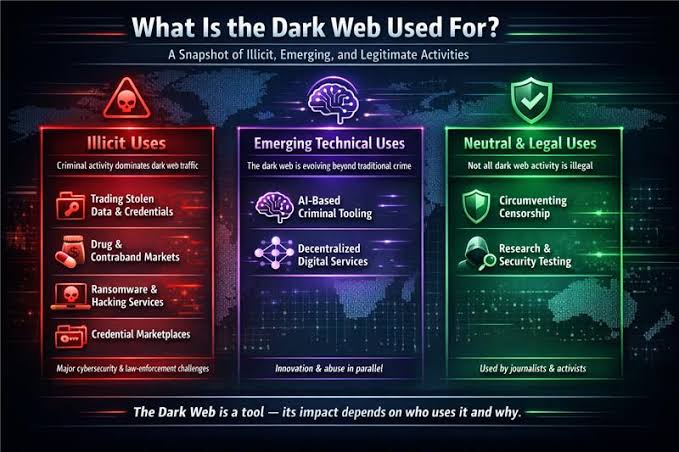
Dark web marketplaces have become a recurring subject in cybersecurity discussions, often cited as examples of how digital ecosystems can be used for both anonymity and criminal activity. Names like “Ultclub” are sometimes referenced in online forums, threat intelligence reports, and cybersecurity ultclub conversations as part of this broader underground landscape. While the specific nature or legitimacy of such platforms can be difficult to confirm, they serve as useful case studies for understanding how cybercrime ecosystems operate and what lessons can be learned from them.
This article explores cybersecurity insights drawn from dark web marketplace behavior, focusing on risk patterns, attacker strategies, and defensive measures that individuals and organizations can apply in the real world.
Understanding Dark Web Marketplaces
Dark web marketplaces are online platforms that operate on anonymized networks and are not accessible through standard search engines. These environments are often associated with the exchange of illicit digital goods and services, although the underlying technology itself is neutral.
Access to such networks is typically facilitated through privacy-focused tools like the Tor Browser, which routes internet traffic through multiple encrypted nodes to obscure user identity and location. While this technology is widely used for legitimate privacy purposes, it is also commonly associated with hidden services that host unregulated marketplaces.
Ultclub, as it is often mentioned in cybersecurity discussions, is best understood in this context: not necessarily as a confirmed single platform, but as a representation of how underground marketplaces are structured and how they evolve over time.
The Structure of Underground Ecosystems
One of the key lessons from analyzing dark web marketplaces is that they are rarely isolated entities. Instead, they function as interconnected ecosystems.
Fragmented but Networked Communities
Rather than existing as one centralized marketplace, underground activity is typically spread across multiple forums, ultclub.tm private channels, and invite-only groups. If one platform is shut down, others quickly emerge to fill the gap.
Role Specialization
Cybercriminal ecosystems often mirror legitimate digital economies. Different participants specialize in different roles, such as:
- Data brokers who trade stolen credentials
- Developers who create malicious software
- Operators who manage marketplaces
- “Customer support” agents who resolve disputes
- Money launderers who handle financial flows
This division of labor increases efficiency and resilience.
Reputation-Based Trust
Even in illegal environments, trust is essential. Many marketplaces use rating systems, transaction histories, or long-term membership to establish credibility among participants. This creates a paradox: highly anonymous systems still require structured trust mechanisms.
Key Cybersecurity Lessons from Dark Web Marketplaces
Studying environments like those associated with Ultclub reveals important lessons for cybersecurity professionals and everyday users.
1. Data Has a Market Value
One of the most critical insights is that stolen data is treated as a tradable commodity. Credentials, financial information, and personal identities can be packaged and sold repeatedly.
Once data is compromised, it often circulates across multiple platforms, increasing long-term risk for victims. This highlights the importance of preventing breaches rather than reacting after they occur.
2. Attackers Operate Like Businesses
Modern cybercrime is highly organized. Many underground operations function with business-like efficiency, including pricing models, customer support structures, and product categorization.
This professionalization means that cyberattacks are no longer random or opportunistic—they are planned, optimized, and scalable.
3. Automation Increases Attack Speed
Many cybercriminal tools are designed to automate tasks such as credential testing, vulnerability scanning, or phishing distribution. This allows attackers to target thousands of systems in a short period.
The implication for defenders is clear: manual monitoring alone is insufficient. Automated detection and response systems are essential.
4. Anonymity Is Not Absolute
Although tools like the Tor Browser provide strong anonymity protections, they are not infallible. Operational security mistakes, metadata leaks, and law enforcement infiltration have led to the disruption of many underground platforms.
This demonstrates an important cybersecurity principle: no system is completely anonymous if enough data points are analyzed over time.
5. Trust Exploitation Is Central to Cybercrime
Dark web marketplaces often rely on deception even within criminal communities. Fake vendors, exit scams, and fraudulent listings are common.
This shows that trust exploitation is not limited to traditional phishing attacks—it is embedded in the structure of underground economies themselves.
Common Threat Patterns Observed in Dark Web Ecosystems
By analyzing marketplaces similar to those associated with Ultclub discussions, cybersecurity researchers identify recurring threat patterns.
Credential-Based Attacks
Stolen usernames and passwords remain one of the most common commodities. These credentials are often reused across multiple services, increasing the impact of a single breach.
Phishing Infrastructure
Cybercriminals frequently sell phishing kits that allow even low-skilled attackers to launch convincing scams.
Malware Distribution
Malicious software such as spyware, ransomware, and keyloggers is often packaged and sold as ready-to-use tools.
Data Breach Monetization
Large databases from corporate breaches are often broken into smaller packages and resold multiple times across different platforms.
Defensive Cybersecurity Strategies
Understanding underground ecosystems is only useful if it leads to stronger defenses. Organizations and individuals can adopt several key strategies to reduce exposure.
Strengthen Identity Security
- Use multi-factor authentication across all critical accounts
- Avoid password reuse across platforms
- Use password managers to generate strong credentials
Improve Network Monitoring
Organizations should implement systems that detect unusual login behavior, data exfiltration, and abnormal access patterns.
Patch Management
Many attacks exploit known vulnerabilities. Regular software updates reduce the risk of exploitation.
Employee Awareness Training
Since many attacks begin with social engineering, training employees to recognize phishing attempts is essential.
Threat Intelligence Integration
Security teams increasingly rely on threat intelligence feeds to monitor emerging risks. Insights derived from dark web monitoring can help organizations prepare for new attack methods before they become widespread.
The Role of Cybersecurity Research
Analyzing underground ecosystems is not about promoting access but about understanding risk. Researchers study platforms and discussions associated with names like Ultclub to identify:
- Emerging attack techniques
- New malware variants
- Data leak trends
- Criminal collaboration patterns
This intelligence helps governments, security companies, and private organizations strengthen defenses.
Ethical and Legal Considerations
It is important to emphasize that accessing or engaging with illegal marketplaces can carry serious legal consequences depending on jurisdiction. Cybersecurity research is conducted under controlled and legal frameworks, often involving monitoring, analysis, and threat intelligence rather than participation.
Ethical cybersecurity work focuses on defense, prevention, and education—not involvement in illicit activity.
The Future of Dark Web Marketplaces
Underground digital ecosystems are constantly evolving. Even when specific marketplaces disappear, new ones emerge with improved security, better anonymity tools, and more sophisticated operational structures.
Future developments may include:
- Increased use of decentralized platforms
- Greater automation in fraud services
- More encrypted communication layers
- Expansion of AI-driven cybercrime tools
At the same time, defensive technologies are also advancing. Artificial intelligence-based detection systems, behavioral analytics, and global cybersecurity cooperation are improving the ability to identify and disrupt cybercriminal operations.
Conclusion
The analysis of dark web marketplaces, including references like Ultclub, provides valuable insight into how modern cybercrime ecosystems function. These environments demonstrate that cyber threats are no longer isolated incidents but part of structured, evolving digital economies.
Key lessons include the value of stolen data, the professionalization of cybercrime, the importance of automation in attacks, and the central role of trust exploitation. At the same time, these ecosystems highlight the critical need for strong cybersecurity practices across all levels of digital interaction.
Ultimately, the goal of studying such environments is not curiosity but protection. By understanding how underground networks operate, individuals and organizations can build stronger defenses, reduce risk exposure, and adapt to the constantly changing landscape of digital security.

